前置
课程内容:
- 深度学习基础:线性神经网络,多层感知机
- 卷积神经网络:LeNet, AlexNet, VGG, Inception, ResNet
- 循环神经网络:RNN,GRU, LSTM, seq2seq
- 注意力机制:Attention,Transformer
- 优化算法:SGD,Momentum,Adam,
- 高性能计算:并行,多GPU,分布式
- 计算机视觉:目标检测,语义分割
- 自然语言处理:词嵌入,BERT
环境:
python3.8
miniconda
pip install jupyter d2l torch torchvision
wget https://zh-v2.d2l.ai/d2l-zh.zip
ssh -L8888:localhost:8888 [email protected]
数据操作
- 0d 一个类别
- 1d 一个特征向量
- 2d 一个样本的特征矩阵
- 3d 一个 RGB 图片(width,height,channel)
- 4d 一批量 RGB 图片(batch,width,height,channel)
- 5d 一批量视频(batch,time,width,height,channel)
tensor 几乎是沿用了 numpy.ndarray,包含基本的构造函数、运算、索引切片
连结运算:
torch.cat((X, Y), dim=0), torch.cat((X, Y), dim=1)广播机制:行列不相同的两个 tensor 通过复制部分元素使得具有相同的 shape 进行计算
尽量使用原地计算的方式(+=,-=)节省内存(节省内存申请和释放的时间)
线性代数
维度:对于向量来说,维度指向量的长度;对于张量来说,维度指轴的个数
范数:
np.linalg.norm(u)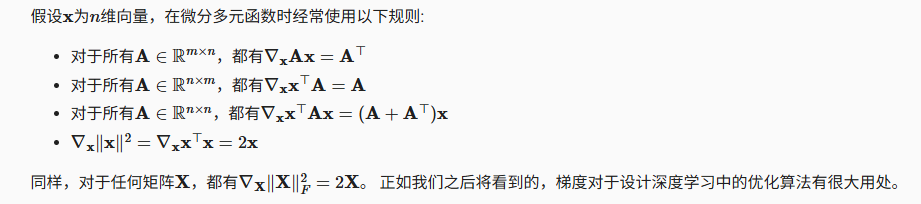
矩阵计算
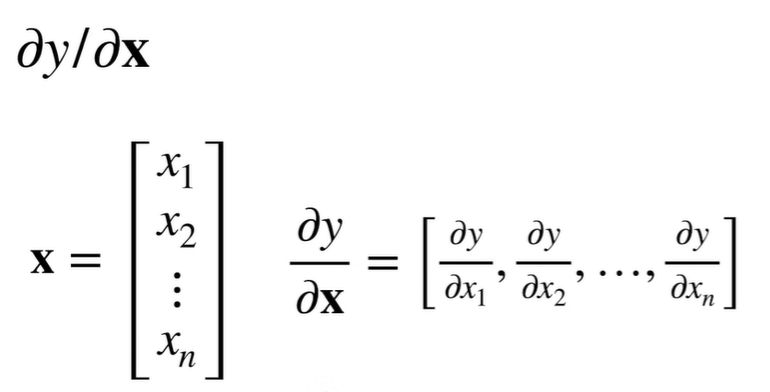
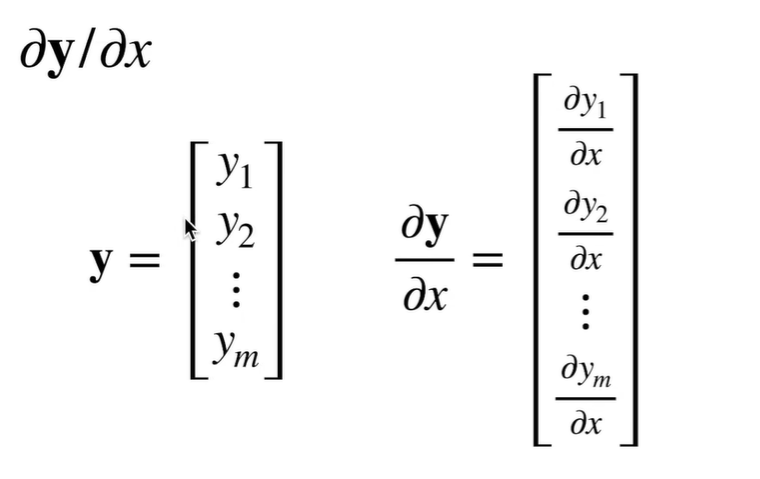
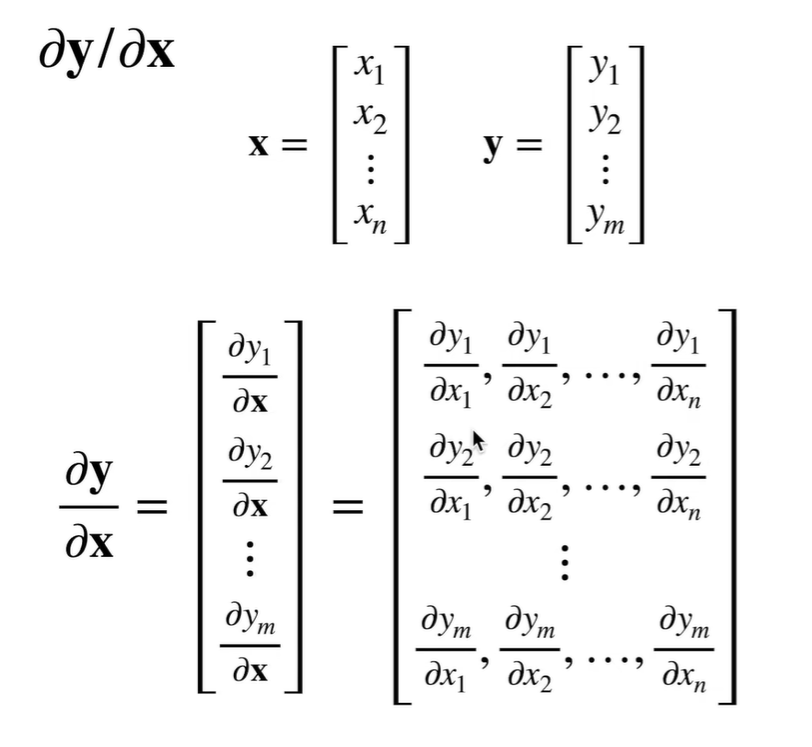
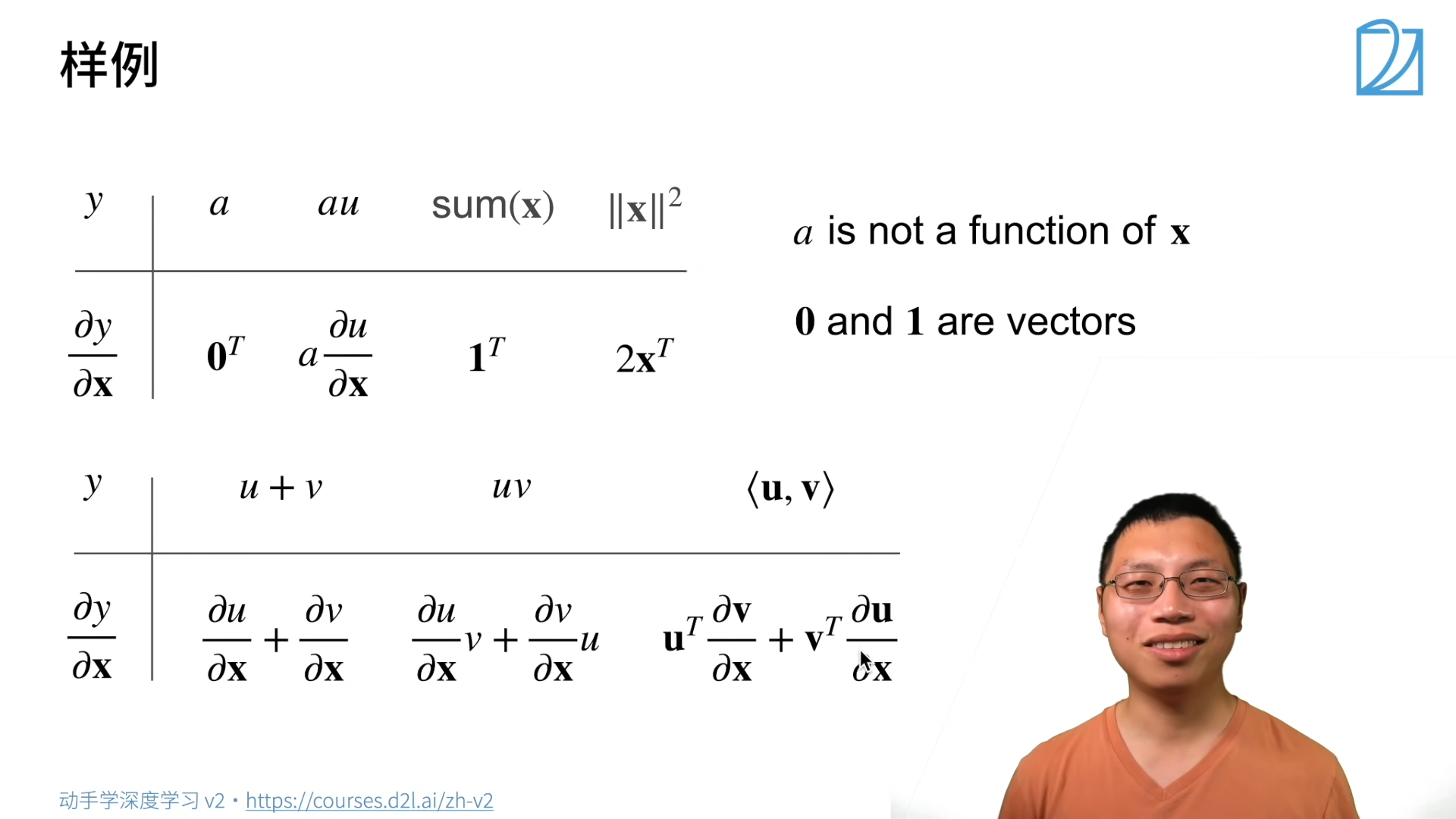
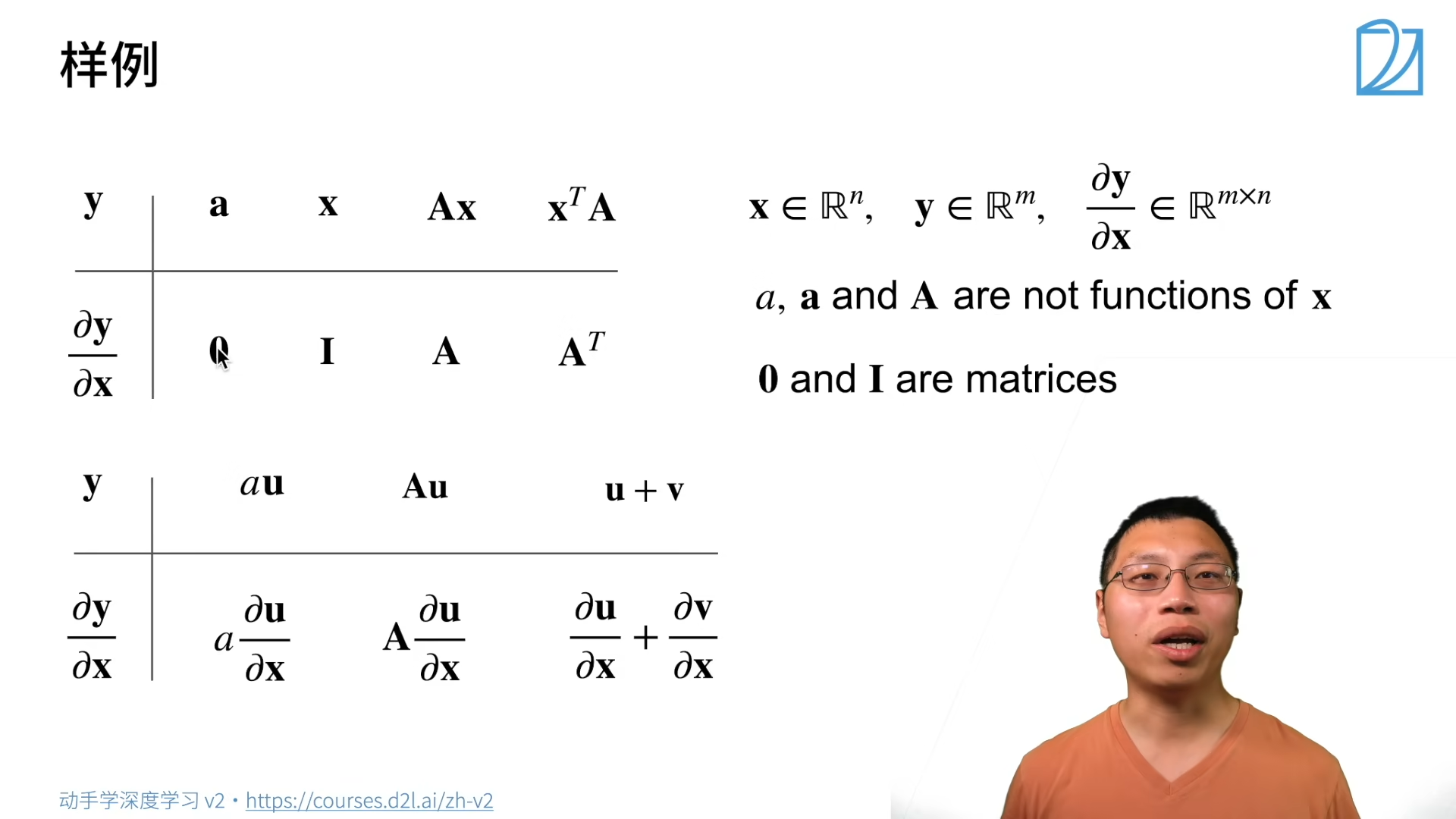
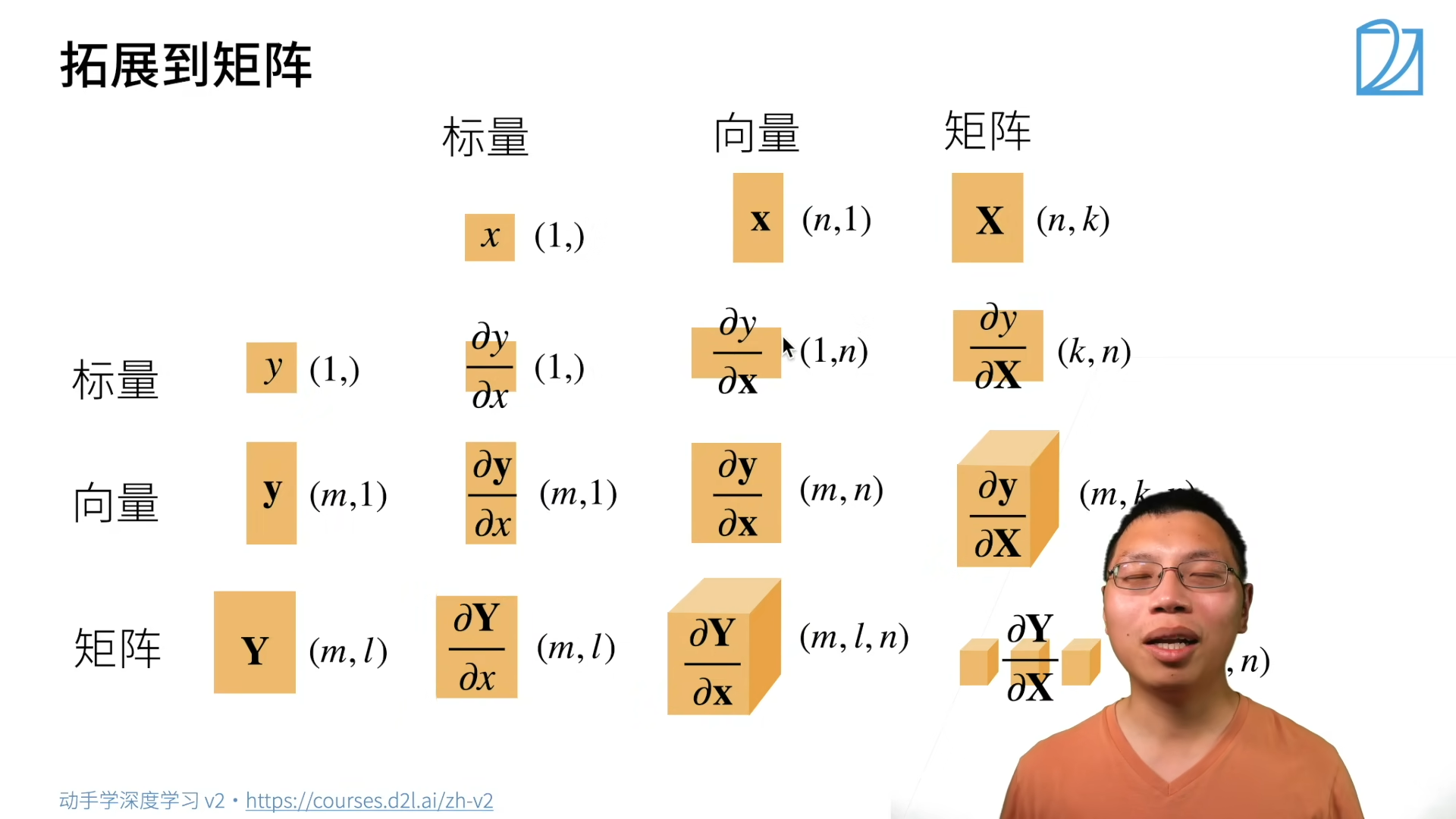
自动微分
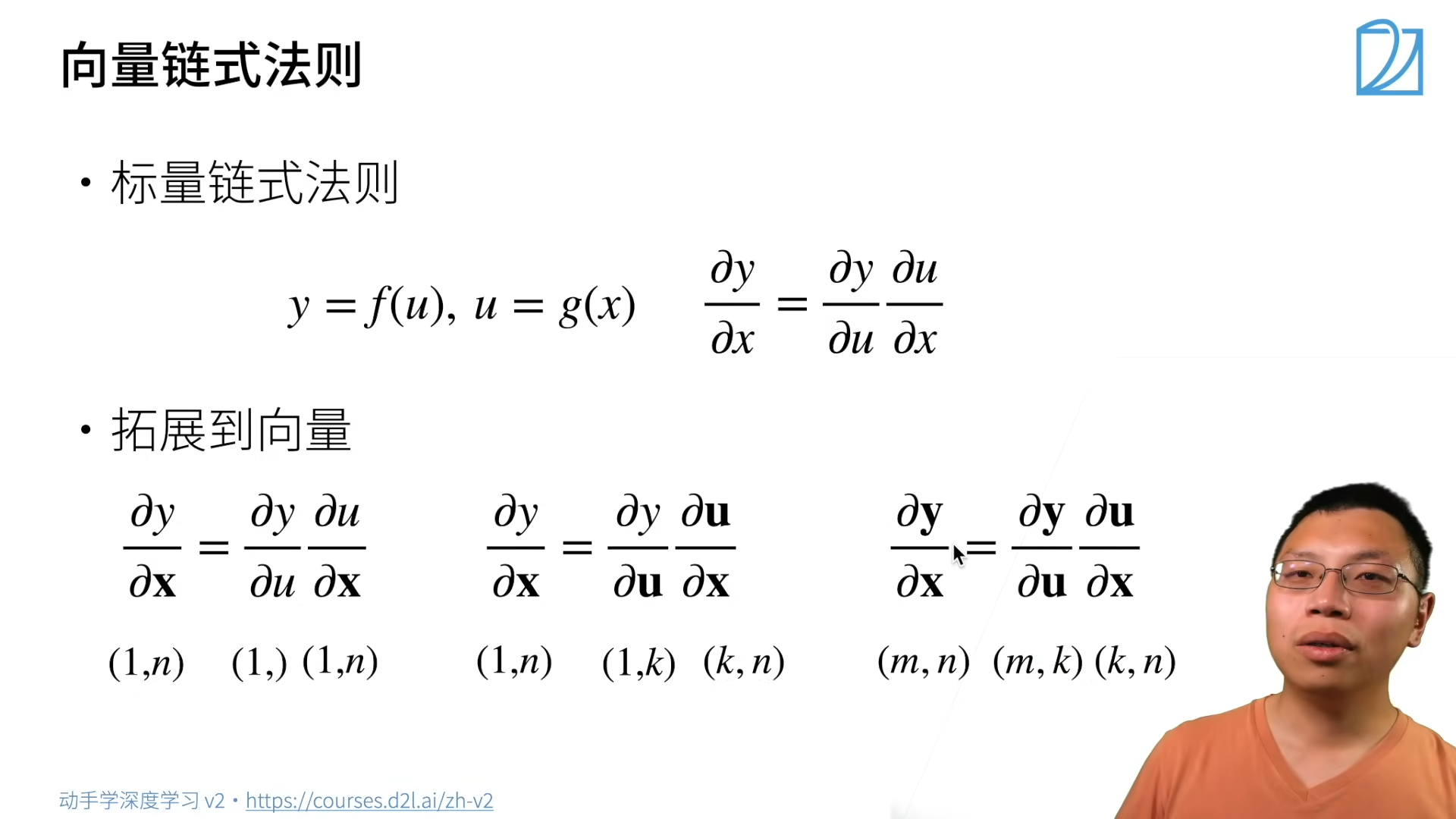
计算梯度
import torch

x = torch.arange(4.0)
x.requires_grad_(True)
y = 2 * torch.dot(x, x)
y.backward()
x.grad # tensor([ 0.,  4.,  8., 12.])
x.gard == 4 * x
理解下方几个例子
y = x.sum()
####
y = x * x
y = y.sum()
线性神经网络
手搓线性回归
数据集:
def synthetic_data(w, b, num_examples):  #@save
    """生成y=Xw+b+噪声"""
    X = torch.normal(0, 1, (num_examples, len(w)))
    y = torch.matmul(X, w) + b
    y += torch.normal(0, 0.01, y.shape)
    return X, y.reshape((-1, 1))

true_w = torch.tensor([2, -3.4])
true_b = 4.2
features, labels = synthetic_data(true_w, true_b, 1000)

def data_iter(batch_size, features, labels):
    num_examples = len(features)
    indices = list(range(num_examples))
    # 这些样本是随机读取的,没有特定的顺序
    random.shuffle(indices)
    for i in range(0, num_examples, batch_size):
        batch_indices = torch.tensor(
            indices[i: min(i + batch_size, num_examples)])
        yield features[batch_indices], labels[batch_indices]
初始模型参数
w = torch.normal(0, 0.01, size=(2,1), requires_grad=True)
b = torch.zeros(1, requires_grad=True)

def linreg(X, w, b):  #@save
    """线性回归模型"""
    return torch.matmul(X, w) + b

def squared_loss(y_hat, y):  #@save
    """均方损失"""
    return (y_hat - y.reshape(y_hat.shape)) ** 2 / 2

def sgd(params, lr, batch_size):  #@save
    """小批量随机梯度下降"""
    with torch.no_grad():
        for param in params:
            param -= lr * param.grad / batch_size
            param.grad.zero_()
训练
lr = 0.03
num_epochs = 3
net = linreg
loss = squared_loss

for epoch in range(num_epochs):
    for X, y in data_iter(batch_size, features, labels):
        l = loss(net(X, w, b), y)  # X和y的小批量损失
        # 因为l形状是(batch_size,1),而不是一个标量。l中的所有元素被加到一起,
        # 并以此计算关于[w,b]的梯度
        l.sum().backward()
        sgd([w, b], lr, batch_size)  # 使用参数的梯度更新参数
    with torch.no_grad():
        train_l = loss(net(features, w, b), labels)
        print(f'epoch {epoch + 1}, loss {float(train_l.mean()):f}')
softmax 回归(分类)
对输出使用独热编码 one-hot
交叉熵衡量两个概率的区别:
Huber’s Robust Loss
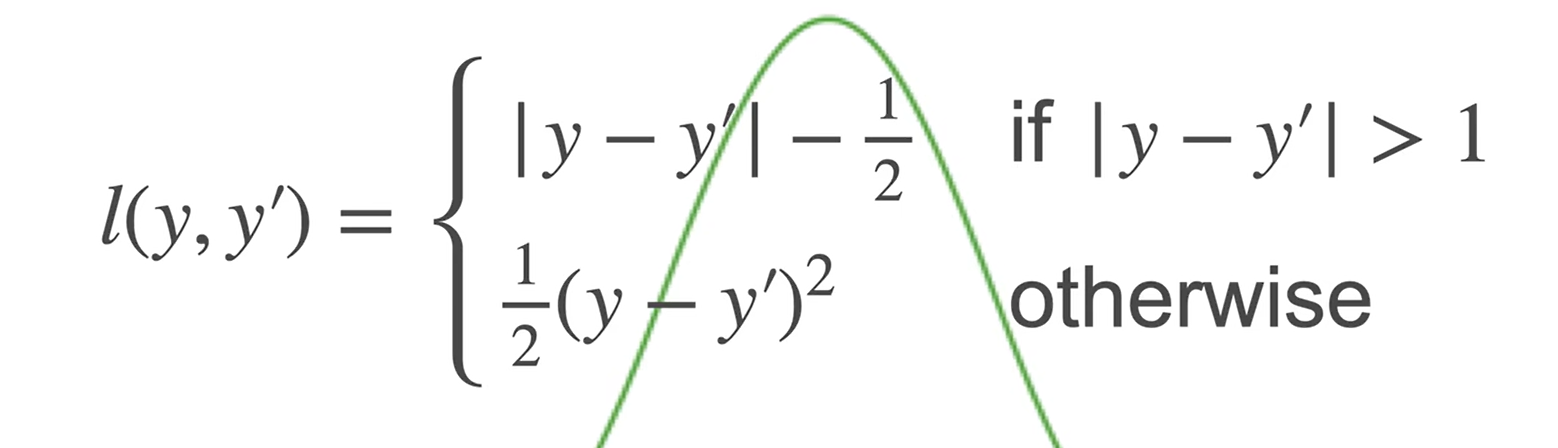
数据集:
def load_data_fashion_mnist(batch_size, resize=None):  # @save
    """下载Fashion-MNIST数据集,然后将其加载到内存中"""
    trans = [transforms.ToTensor()]
    if resize:
        trans.insert(0, transforms.Resize(resize))
    trans = transforms.Compose(trans)
    mnist_train = torchvision.datasets.FashionMNIST(root="../data", train=True, transform=trans, download=True)
    mnist_test = torchvision.datasets.FashionMNIST(root="../data", train=False, transform=trans, download=True)
    return (
        data.DataLoader(mnist_train, batch_size, shuffle=True, num_workers=MAX_WORKERS),
        data.DataLoader(mnist_test, batch_size, shuffle=False, num_workers=MAX_WORKERS),
    )
def get_fashion_mnist_labels(labels):  #@save
    """返回Fashion-MNIST数据集的文本标签"""
    text_labels = ['t-shirt', 'trouser', 'pullover', 'dress', 'coat',
                   'sandal', 'shirt', 'sneaker', 'bag', 'ankle boot']
    return [text_labels[int(i)] for i in labels]

batch_size = 256
train_iter, test_iter = load_data_fashion_mnist(batch_size)
参数:
num_inputs = 784
num_outputs = 10
W = torch.normal(0, 0.01, size=(num_inputs, num_outputs), requires_grad=True)
b = torch.zeros(num_outputs, requires_grad=True)

def softmax(X):
    X_exp = torch.exp(X)
    partition = X_exp.sum(1, keepdim=True) # 对每一行求和,保持维度
    return X_exp / partition  # 这里应用了广播机制

def net(X):
    return softmax(torch.matmul(X.reshape((-1, W.shape[0])), W) + b)

def cross_entropy(y_hat, y):
    return - torch.log(y_hat[range(len(y_hat)), y])

 def accuracy(y_hat, y):  #@save
    """计算预测正确的数量"""
    if len(y_hat.shape) > 1 and y_hat.shape[1] > 1:
        y_hat = y_hat.argmax(axis=1)
    cmp = y_hat.type(y.dtype) == y
    return float(cmp.type(y.dtype).sum())

def evaluate_accuracy(net, data_iter):  #@save
    """计算在指定数据集上模型的精度"""
    if isinstance(net, torch.nn.Module):
        net.eval()  # 将模型设置为评估模式
    metric = Accumulator(2)  # 正确预测数、预测总数
    with torch.no_grad():
        for X, y in data_iter:
            metric.add(accuracy(net(X), y), y.numel())
    return metric[0] / metric[1]
训练:
def train_epoch_ch3(net, train_iter, loss, updater):  #@save
    """训练模型一个迭代周期(定义见第3章)"""
    # 将模型设置为训练模式
    if isinstance(net, torch.nn.Module):
        net.train()
    # 训练损失总和、训练准确度总和、样本数
    metric = Accumulator(3)
    for X, y in train_iter:
        # 计算梯度并更新参数
        y_hat = net(X)
        l = loss(y_hat, y)
        if isinstance(updater, torch.optim.Optimizer):
            # 使用PyTorch内置的优化器和损失函数
            updater.zero_grad()
            l.mean().backward()
            updater.step()
        else:
            # 使用定制的优化器和损失函数
            l.sum().backward()
            updater(X.shape[0])
        metric.add(float(l.sum()), accuracy(y_hat, y), y.numel())
    # 返回训练损失和训练精度
    return metric[0] / metric[2], metric[1] / metric[2]

def train_ch3(net, train_iter, test_iter, loss, num_epochs, updater):  #@save
    """训练模型(定义见第3章)"""
    for epoch in range(num_epochs):
        train_metrics = train_epoch_ch3(net, train_iter, loss, updater)
        test_acc = evaluate_accuracy(net, test_iter)
        print(epoch + 1, train_metrics + (test_acc,))
    train_loss, train_acc = train_metrics
    assert train_loss < 0.5, train_loss
    assert train_acc <= 1 and train_acc > 0.7, train_acc
    assert test_acc <= 1 and test_acc > 0.7, test_acc
感知机
class Perceptron:
    def __init__(self, learning_rate=0.1, max_epochs=1000):
        self.lr = learning_rate
        self.max_epochs = max_epochs
        self.w = None
        self.b = None
        self.history = []

    def fit(self, X, y):
        n_samples, n_features = X.shape
        self.w = np.zeros(n_features)
        self.b = 0.0
        self.history = []

        for epoch in range(self.max_epochs):
            misclassified = 0
            for i in range(n_samples):
                if y[i] * (np.dot(self.w, X[i]) + self.b) <= 0:
                    self.w += self.lr * y[i] * X[i]
                    self.b += self.lr * y[i]
                    misclassified += 1
            self.history.append({
                'w': self.w.copy(),
                'b': self.b,
                'misclassified': misclassified
            })
            if misclassified == 0:
                print(f'在第 {epoch + 1} 轮训练后收敛,所有样本分类正确')
                return
        print(f'达到最大轮次 {self.max_epochs},仍有 {misclassified} 个误分类')

    def predict(self, X):
return np.sign(np.dot(X, self.w) + self.b)- 主站 Home
- 新闻动态 News
- 组内成员 Members
- 研究方向 Research
- 研究成果 Findings
- 前沿跟踪 Followings
- 资料下载 Download
- 联系我们 Contact
| 文件名(File): | 下载(Download): |
|---|---|
| read me | Readme.txt |
| sub info | Sub_info.txt |
| 64-channels | 64-channels.loc |
| freqency phase | Freq_Phase.mat |
| S1.mat | S1.mat.7z |
| S2.mat | S2.mat.7z |
| S3.mat | S3.mat.7z |
| S4.mat | S4.mat.7z |
| S5.mat | S5.mat.7z |
| S6.mat | S6.mat.7z |
| S7.mat | S7.mat.7z |
| S8.mat | S8.mat.7z |
| S9.mat | S9.mat.7z |
| S10.mat | S10.mat.7z |
| S11.mat | S11.mat.7z |
| S12.mat | S12.mat.7z |
| S13.mat | S13.mat.7z |
| S14.mat | S14.mat.7z |
| S15.mat | S15.mat.7z |
| S16.mat | S16.mat.7z |
| S17.mat | S17.mat.7z |
| S18.mat | S18.mat.7z |
| S19.mat | S19.mat.7z |
| S20.mat | S20.mat.7z |
| S21.mat | S21.mat.7z |
| S22.mat | S22.mat.7z |
| S23.mat | S23.mat.7z |
| S24.mat | S24.mat.7z |
| S25.mat | S25.mat.7z |
| S26.mat | S26.mat.7z |
| S27.mat | S27.mat.7z |
| S28.mat | S28.mat.7z |
| S29.mat | S29.mat.7z |
| S30.mat | S30.mat.7z |
| S31.mat | S31.mat.7z |
| S32.mat | S32.mat.7z |
| S33.mat | S33.mat.7z |
| S34.mat | S34.mat.7z |
| S35.mat | S35.mat.7z |
| 文件名(File): | 下载(Download): |
|---|---|
| note | note.pdf |
| description | description.pdf |
| S1~S10 | S1-S10.tar.gz |
| S11~S20 | S11-S20.tar.gz |
| S21~S30 | S21-S30.tar.gz |
| S31~S40 | S31-S40.tar.gz |
| S41~S50 | S41-S50.tar.gz |
| S51~S60 | S51-S60.tar.gz |
| S61~S70 | S61-S70.tar.gz |
| 文件名(File): | 下载(Download): |
|---|---|
| note | note.pdf |
| description | description.pdf |
| S1~S10 | S1-S10.tar.gz |
| S11~S20 | S11-S20.tar.gz |
| S21~S30 | S21-S30.tar.gz |
| S31~S40 | S31-S40.tar.gz |
| S41~S50 | S41-S50.tar.gz |
| S51~S60 | S51-S60.tar.gz |
| S61~S70 | S61-S70.tar.gz |
| 文件名(File): | 下载(Download): |
|---|---|
| Description | Description.tar.gz |
| S1~S10 | S1-S10.tar.gz |
| S11~S20 | S11-S20.tar.gz |
| S21~S30 | S21-S30.tar.gz |
| S31~S40 | S31-S40.tar.gz |
| S41~S50 | S41-S50.tar.gz |
| S51~S60 | S51-S60.tar.gz |
| S61~S70 | S61-S70.tar.gz |
| S71~S80 | S71-S80.tar.gz |
| S81~S90 | S81-S90.tar.gz |
| S91~S100 | S91-S100.tar.gz |
| 文件名(File): | 下载(Download): |
|---|---|
| Description | Description.txt |
| S1~S10 | S1-S10.mat.zip |
| S11~S14 | S11-S14.mat.zip |
| 文件名(File): | 下载(Download): |
|---|---|
| 64-channels | 64-channels.loc |
| note | note.txt |
| Readme | Readme.txt |
| subjects_information | subjects_information.xlsx |
| S1~S10 | S1-S10.mat.zip |
| S11~S20 | S11-S20.mat.zip |
| S21~S30 | S21-S30.mat.zip |
| S31~S40 | S31-S40.mat.zip |
| S41~S50 | S41-S50.mat.zip |
| S51~S60 | S51-S60.mat.zip |
| S61~S64 | S61-S64.mat.zip |
| 文件名(File): | 下载(Download): |
|---|---|
| 62-channels | 62-channels.loc |
| Description | Description.pdf |
| sub_info | sub_info.txt |
| Image | Image.zip |
| G1D1D2 | G1D1D2.zip |
| G2D1D2 | G2D1D2.zip |
| G3D1D2 | G3D1D2.zip |
| G4D1D2 | G4D1D2.zip |
| G5D1D2 | G5D1D2.zip |
| G6D1D2 | G6D1D2.zip |
| G7D1D2 | G7D1D2.zip |
| 文件名(File): | 下载(Download): |
|---|---|
| Readme | Readme.pdf |
| Stimulation information | stimulation_information.pdf |
| Subjects information | subjects_information.mat |
| Impedance | Impedance.mat |
| S1~S10 | S001-S010.zip |
| S11~S20 | S011-S020.zip |
| S21~S30 | S021-S030.zip |
| S31~S40 | S031-S040.zip |
| S41~S50 | S041-S050.zip |
| S51~S60 | S051-S060.zip |
| S61~S70 | S061-S070.zip |
| S71~S80 | S071-S080.zip |
| S81~S90 | S081-S090.zip |
| S91~S102 | S091-S102.zip |
| 文件名(File): | 下载(Download): |
|---|---|
| Readme | Readme.pdf |
| Code Word Table | reqCodeword.mat |
| Offline experiments S1-S4 | S1-S4.rar |
| Offline experiments S5-S8 | S5-S8.rar |
| Online experiments SS1-SS4 | SS1-SS4.rar |
| Online experiments SS5-SS8 | SS5-SS8.rar |
| Online experiments SS9-SS12 | SS9-SS12.rar |
| 文件名(File): | 下载(Download): |
|---|---|
| Readme | readme.pdf |
| Experiment 1: S1-S4 | S1-S4.zip |
| Experiment 1: S5-S8 | S5-S8.zip |
| Experiment 1: S9-S12 | S9-S12.zip |
| Experiment 2: S1-S2 | S1-S2.zip |
| Experiment 2: S3-S4 | S3-S4.zip |
| Experiment 2: S5-S6 | S5-S6.zip |
| Experiment 2: S7-S8 | S7-S8.zip |
| Experiment 2: S9-S10 | S9-S10.zip |
| Experiment 2: S11-S12 | S11-S12.zip |
| Experiment 3: S1-S2 | S1-S2.zip |
| Experiment 3: S3-S4 | S3-S4.zip |
| Experiment 3: S5-S6 | S5-S6.zip |
| Experiment 3: S7-S8 | S7-S8.zip |
| Experiment 3: S9-S10 | S9-S10.zip |
| Experiment 3: S11-S12 | S11-S12.zip |
| Experiment 4: S1-S4 | S1-S4.zip |
| Experiment 4: S5-S8 | S5-S8.zip |
| Experiment 4: S9-S12 | S9-S12.zip |
| 文件名(File): | 下载(Download): |
|---|---|
| Readme | README.pdf |
| Dataset | AutismDetectionDataset.zip |
| 文件名(File): | 下载(Download): |
|---|---|
| Readme | README.txt |
| 1 target | Data of 1 Target.7z |
| 40 targets offline | Data of 40 Targets Offline.7z |
若未能找到相应所需数据,请移至 清华大学脑机接口研究组(www.thubci.com) 资料下载页面下载或联系我们。
If you can not find the necessary data, please visit THU BCI Lab (www.thubci.com) Download page or contact us.
拖拽到此处完成下载
图片将完成下载
AIX智能下载器